Safeguarding and Protection
Educating & protecting our children
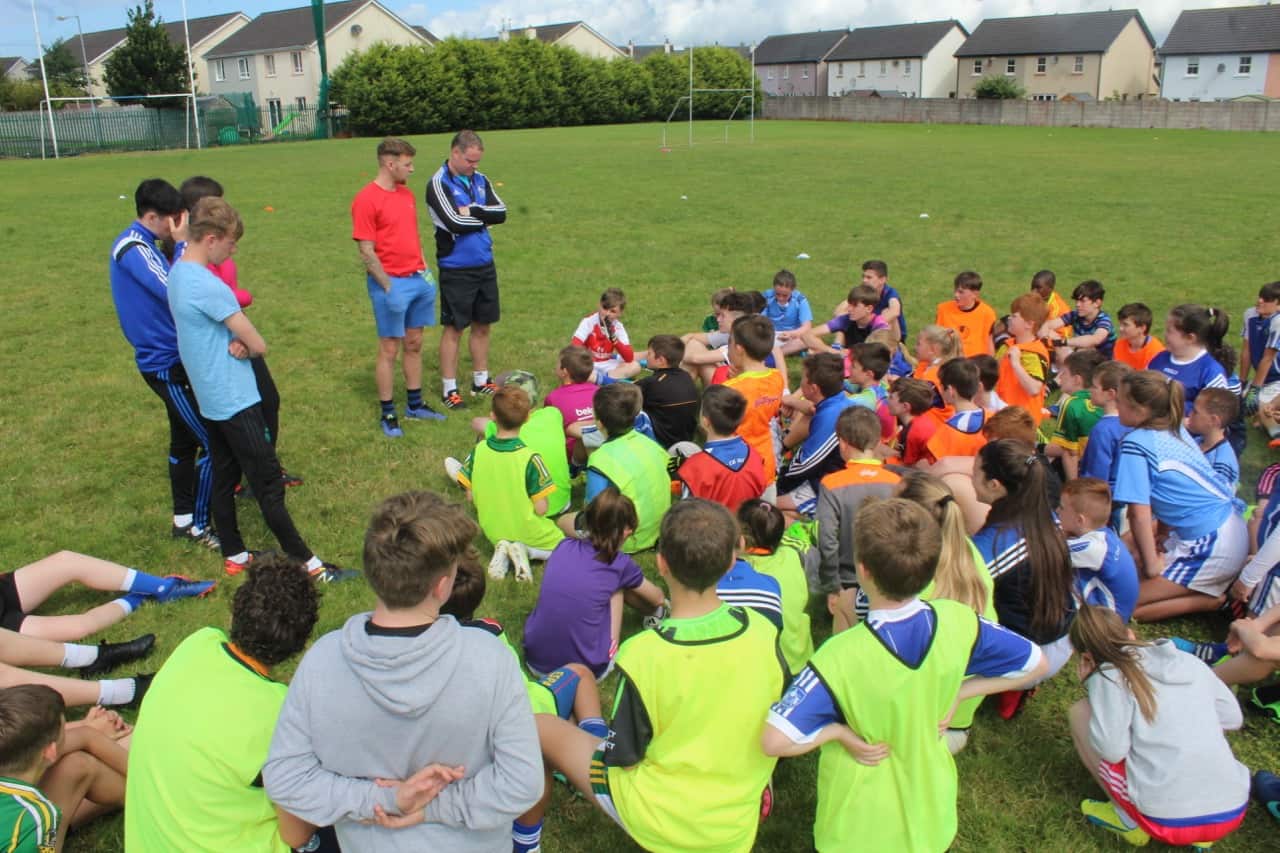
The Association and its sister organisations recently launched (April 2018) online version of Code of Behaviour (Underage), the joint Code of Best Practice in Youth Sport. This Code has been agreed between the GAA, the Ladies Gaelic Football Association, the Camogie Association, GAA Handball Ireland and the Rounders Council of Ireland.
The Code replaces all previous Codes and is a mandatory Code of Best Practice for all Gaelic Games Associations in our work with underage players. It is a comprehensive good practice guidance publication and we are anxious that as many players, coaches, parents and other Club personnel have immediate access to its contents.
The Code is also available in Disc format (not printed) form the National Children’s Office. For more information or a disc, please contact the GAA National Children’s Officer, Gearóid Ó Maoilmhichíl at 01-8363222 or nationalchildrensofficer@gaa.ie.
View the Code of Behaviour (Underage) here.
The Gaelic Athletic Association is committed to creating and maintaining the safest possible environment for all young people who wish to participate in our Gaelic Games and activities. We will take all practicable steps to protect them from discernible forms of abuse, from harm, discrimination or degrading treatment and shall respect their rights, wishes and feelings.
We do this by:
- Recognising that all children have the right to be protected from harm.
- Ensuring that all of our coaches and volunteers are carefully recruited and selected and that they accept responsibility for ensuring the well-being of children in their care.
- Responding swiftly and appropriately to protect the welfare of children who participate in our games and related activities.
- Providing parents and children with the opportunity to voice any concerns that they may have.
- Appointing Children’s Officers in each of our Clubs and at County Board level.
- Appointing a National Children’s Officer to oversee the implementation of good child protection and welfare practices within the Association.
- Appointing a Designated Person in each Club and County who will liaise with the statutory authorities as appropriate.
- Appointing a National Designated Person to assist in the processing of child protection and welfare matters.
- Ensuring that all allegations of abuse of young people are confidentially dealt with in accordance the Association’s Guidelines for Dealing with Allegations of Abuse and with statutory guidelines and relevant legislation.
- Reviewing the effectiveness of our Child Protection procedures and policies on an ongoing basis.
- Ensuring that members, coaches, team mentors, administrators, parents/guardians and spectators sign up to and adhere to our Code of Behaviour.
- 2023 Kerry GAA Safeguarding Statement
- 2023 Kerry GAA Safeguarding Statement (As Gaeilge)
- Give Respect, Get Respect – Logo
- Give Respect, Get Respect – Logo as Gaeilge
Maintaining Appropriate Levels of Behaviour in our Work with Children & Young People
Maintaining Appropriate Levels of Behaviour in our Work with Children & Young People complements Sport Ireland Code of Ethics and the Code of Behaviour (Underage), the joint Code of Best Practice in Youth Sport and addresses the appropriate levels of behaviour, practice and conduct required from our young players, officials, coaches, trainers, mentors, supporters, parents/guardians and clubs.
For ease of use, the document can be downloaded by the appropriate section from the first edition below. It is jointly promoted by Cumann Lúthchleas Gael (The Gaelic Athletic Association), Cumann Camógaíochta (Camogie Association), Cumann Peil Gael na mBan (Ladies Gaelic Football Association), Liathróid Láimhe CLG na hÉireann (GAA Handball Ireland) and Cluiche Corr na hÉireann (GAA Rounders ) as we promote good practice and assist those who promote and deliver our games to the highest possible standards.
Resources:
- Code of Behaviour (Underage)
- Download a GAA Tackling Bullying Poster.
- Cód Iompair
- Póstaer ar Bhulaíocht
Garda Vetting In The GAA
Vetting in the GAA
The GAA has long established the principle of vetting any person who, on our behalf, works with children or vulnerable adults in our Association. This principle is enshrined in rule through our Code of Best Practice in Youth Sport and has become part of the overall recruitment and selection process for those who wish to work with us in the GAA, in a voluntary or paid role.
When the Irish government commenced the National Vetting Bureau (Children and Vulnerable Persons) Acts on 29 April 2016 it brought mandatory vetting on the island of Ireland into being, given that it had previously been a legal requirement under AccessNI.
It is now a criminal offence, for a person acting on behalf of the GAA, or for the GAA as an Association to permit any person to commence working with children on behalf of the Association without that person first obtaining a vetting disclosure from the Nation Vetting Bureau in respect of the role for which they have been recruited.
GAA VETTING SYSTEM
The New Vetting system went live on Monday 4th of April 2022. The system is now part of Foireann and it is through this system that an individual will now apply to be vetted.
How to apply for Vetting in the Gaelic Games Association:
The Vetting process is broken down into three steps as follows:
Step 1: Logging in to Foireann
- Log into your account on Foireann or create an account on Foireann www.foireann.ie
- Please click on hyperlink for step by step guidance on how to apply for vetting on Foireann.
Step 2: Gaelic Games Vetting Invitation Form
- Once logged into your account on Foireann please
- click – on the Qualifications and Vetting tab
- click – Apply to be Vetted.
Please ensure your current details on your profile are correct.
Please then select your Club and or Association you wish to be vetted for and the role you are applying for vetting.
It is now a requirement to upload
- a copy or screenshot of your Photo ID (passport or drivers’ licence)
and
- a proof of your current address in the form of a Utility Bill (no more than 6 months old).
You are also required to print and sign the Gaelic Game Vetting ID Validation Form and upload this as part of your vetting application
The full list of documents which are accepted for verification can be found here.
Your Club Children’s Officer will then check your ID Documentation and your signed Gaelic Games Vetting ID Validation Form.
If the documents are correct your application will be validated by your Club Children’s Officer and submitted to the GAA.
If the documents are not correct your Club Children’s Officer will reject your application and you will be required to upload the correct documentation.
Step 3: Completing the National Vetting Bureau EVetting Application form
Once you complete the Gaelic Games Invitation Form the information provided is forwarded to the National Vetting Bureau (NVB) by the GAA and you will receive an on-line NVB Vetting Form to complete.
The NVB will issue you with the NVB Vetting Application form.
This will be issued to the email address you provided in your Gaelic Games Invitation Form.
Completing this form is a confidential matter between you and the NVB.
All sections of the form including current and previous addresses, email address and contact telephone numbers, information on convictions and prosecutions (if any), plus other information will be required when completing the form.
Once all sections of the form have been answered and the form has been submitted, this then completes your application process for E Vetting in the GAA.
Within a short period of time you shall be contacted by the GAA informing you as to the outcome of the vetting application.
Further Information and links for forms can be found at: https://www.gaa.ie/the-gaa/child-safeguarding-and-protection/vetting
Main Sponsor

Associate Sponsors